
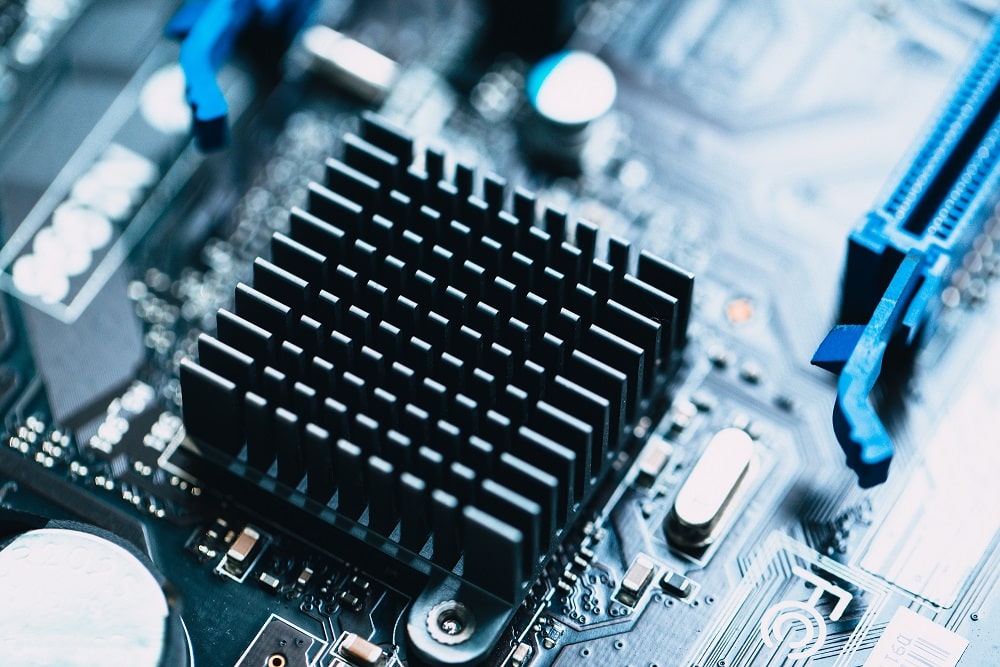
The rapid evolution of high-performance electronics has dramatically reshaped the expectations of modern consumers and industries. Devices are becoming smaller, faster, and more powerful, pushing electronic components to their thermal limits. As processors, power modules, GPUs, RF systems, and high-density circuit boards handle increasingly intensive workloads, they generate significant heat that can impact long-term reliability, performance consistency, and overall system lifespan. Effective thermal management techniques are therefore essential to ensure stable operation in applications ranging from data centers and autonomous vehicles to aerospace systems and advanced consumer electronics. Without proper heat control, components may throttle, degrade more quickly, or fail entirely, resulting in costly downtime and reduced end-user trust. As new architectures and semiconductor technologies emerge, engineers must adopt more innovative, efficient, and scalable cooling solutions to support next-generation high-performance devices.
The foundation of any effective thermal management strategy begins with understanding how heat is generated and transferred within electronic systems. Modern components utilize increasingly dense semiconductor structures, creating localized hotspots that require targeted cooling approaches. Engineers must analyze thermal pathways—from the silicon die to the external ambient environment—while identifying materials that effectively conduct or dissipate heat. Traditional techniques such as conduction, convection, and radiation remain fundamental, but they must be combined with sophisticated engineering methods to meet the thermal challenges of today’s compact device designs. Heat sinks, thermal interface materials, and advanced substrates play crucial roles in moving heat away from sensitive components. Materials such as graphite, copper, aluminum, and high-performance ceramics are widely adopted not only for their thermal conductivity but also for their mechanical stability and reliability under continuous thermal cycling.
Heat sinks remain one of the most widely used passive thermal solutions thanks to their cost-effectiveness and simplicity. Modern heat sink designs leverage fins, microstructures, and optimized surface geometries that increase surface area and improve heat transfer efficiency. Engineers must carefully select materials and design features to balance size, weight, and thermal performance. Meanwhile, thermal interface materials (TIMs) such as thermal pads, pastes, phase-change materials, and gap fillers serve as essential components that minimize air gaps and maximize thermal conductivity between surfaces. The emergence of nano-enhanced TIMs and electrically insulating thermal compounds has significantly improved heat transfer in high-power systems. Even printed circuit board design contributes to thermal control: thicker copper layers, thermal vias, and heat-spreading planes help distribute heat evenly across the device. These techniques, while passive, form the backbone of modern consumer electronics cooling strategies and are essential for devices that prioritize compact form factors and silent operation.
Active cooling methods, however, take thermal management to a more advanced level, especially in high-performance computing and industrial applications. Forced-air cooling through fans or blowers enhances the airflow across heat-generating components, thereby increasing heat dissipation. Engineers must model airflow patterns carefully to avoid turbulence, dead zones, or recirculation that reduces cooling efficiency. For systems demanding even higher performance, liquid cooling offers exceptional heat transfer capabilities, especially in densely packed server hardware, gaming systems, and power electronics. Closed-loop liquid cooling systems use pumps, cold plates, radiators, and coolant channels to transport heat away from critical components. In industrial automation and high-voltage systems, cold plates and direct-to-chip liquid cooling have become standard techniques for maintaining thermal stability under extreme loads. Emerging microfluidic cooling systems, which integrate coolant channels directly into substrates or silicon layers, represent the next generation of thermal innovation, enabling ultra-efficient cooling with minimal additional bulk.
Beyond traditional mechanical cooling methods, advanced thermal techniques are becoming more prevalent as device performance requirements continue to rise. Phase-change materials (PCMs) are increasingly used in electronics that require temporary but powerful heat absorption—such as aerospace hardware, automotive control units, and ruggedized embedded systems. These materials absorb heat as they melt, stabilizing temperatures without requiring active cooling mechanisms. Additionally, vapor chambers and heat pipes provide efficient heat spreading and transport, particularly for compact high-performance devices like smartphones, laptops, and slim industrial controllers. These technologies use sealed chambers filled with working fluids that evaporate and condense to transfer heat quickly and evenly. Meanwhile, thermoelectric coolers (TECs) offer precise temperature control through the Peltier effect, allowing devices to maintain stable operating temperatures even in fluctuating environments. These advanced cooling technologies highlight the increasing convergence of materials science, mechanical engineering, and semiconductor innovation in modern electronics design.
As high-performance systems become more energy-intensive and densely integrated, intelligent thermal management strategies are becoming essential. These include predictive thermal modeling, integrated temperature sensors, and algorithm-driven power management. Modern processors and microcontrollers incorporate dynamic thermal management (DTM) techniques that automatically adjust clock speeds, voltages, and workloads to maintain safe operating temperatures. Artificial intelligence and machine learning models are now being implemented to predict thermal trends based on real-time and historical data, enabling proactive adjustments that reduce the risk of overheating. Engineers also rely on computational fluid dynamics (CFD) simulations to design optimal cooling pathways early in the development process, minimizing trial-and-error and improving overall system efficiency. In large-scale applications such as data centers, AI-driven cooling control systems can reduce energy consumption while ensuring reliable system performance across thousands of interconnected devices.
As emerging technologies continue to push performance boundaries, the importance of effective thermal management is only expected to grow. The rise of electric vehicles, 5G/6G communication systems, quantum computing, and edge-based artificial intelligence will introduce new thermal challenges that demand increasingly sophisticated cooling strategies. Innovations such as two-phase immersion cooling, nanoscale heat-transfer materials, and embedded microchannel cooling systems are shaping the future of high-performance electronics. Sustainability considerations are also guiding the evolution of thermal systems, prompting companies to develop eco-friendly cooling fluids, recyclable materials, and energy-efficient thermal control architectures. Ultimately, thermal management is no longer just a supporting factor in electronics design—it is a critical pillar of system reliability, operational efficiency, and long-term performance. Engineers who master thermal strategies will enable the next generation of groundbreaking electronic technologies, ensuring that the systems of tomorrow remain powerful, stable, and dependable even under the most demanding conditions.