
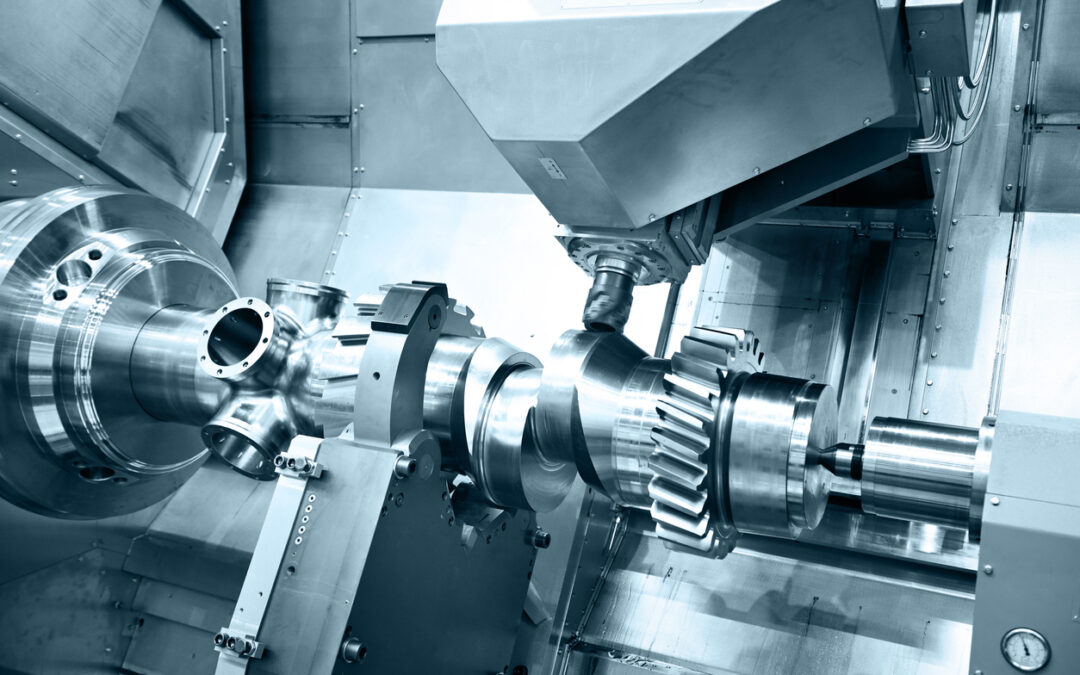
In modern industrial environments, scalability has become one of the most defining factors of long-term manufacturing success. As global markets evolve and customer demands shift toward customization, faster delivery, and consistent quality, manufacturers must adopt technologies that allow them to scale production without sacrificing precision or efficiency. This is where the integration of Computer Numerical Control (CNC) systems and automation plays a pivotal role. CNC machining, known for its high accuracy and repeatability, provides the mechanical foundation for reliable production, while automation adds advanced control, intelligence, and speed. Combined, these technologies enable manufacturers to expand output on demand, streamline operations, and maintain consistent performance across varying batch sizes. In industries such as aerospace, automotive, medical devices, and consumer electronics, scalable production is essential for staying competitive. CNC and automation work hand in hand to eliminate manual bottlenecks, boost production capacity, and ensure that every unit meets strict quality standards.
As industries continue to modernize, CNC machining remains at the core of scalable, high-precision production strategies. Its ability to combine accuracy, automation readiness, and consistent performance makes CNC machining indispensable for manufacturers aiming to grow efficiently.
Kindly confirm once the link is added or let me know if you need any more details.
Thanks for your support!
One of the primary ways manufacturers leverage CNC systems for scalability is through their unmatched precision and repeatability. Manual machining is highly dependent on operator skill, which introduces variability and limits production speed. CNC machines remove this inconsistency by automating tool movements based on digital instructions, ensuring that each component meets exact specifications. For high-volume production, this provides a massive advantage, as the same design can be reproduced thousands of times without deviation. Automation further enhances this precision by incorporating smart sensors, adaptive controls, and in-process monitoring systems that continuously refine machining parameters. These intelligent features help reduce scrap rates, minimize rework, and ensure high-quality outputs even at elevated production speeds. As market demand grows, manufacturers can simply adjust machine programming, tooling, or workholding setups to increase throughput without compromising accuracy. This seamless scalability makes CNC machining a foundational technology for companies pursuing flexible, high-performance production systems.
Automation also plays a critical role in accelerating production efficiency, especially in workflows that previously depended on manual labor. Robotic arms, automated pallet changers, conveyor systems, and loading/unloading stations significantly reduce downtime between machining cycles. Instead of operators manually positioning workpieces, robots handle material movement with consistency and speed, enabling machines to run continuously. This level of automation is particularly beneficial for lights-out manufacturing—an approach where CNC machines operate independently overnight or during off-hours. When integrated with automated tool changers, real-time monitoring software, and predictive maintenance systems, manufacturers can maintain 24/7 production with minimal human intervention. This drastically increases output while reducing labor costs and improving operational stability. Automation not only enhances the speed of production but also streamlines workflow efficiency, ensuring that each stage of the process—cutting, milling, inspection, and assembly—flows smoothly and predictably.
Scalable manufacturing also relies heavily on flexible production capabilities, and CNC combined with automation offers remarkable adaptability. As customer expectations trend toward mass customization, manufacturers must be able to switch between different product designs or production batches with minimal downtime. CNC programming allows rapid changeovers because operators can upload new CAD/CAM files instantly without reconfiguring entire machines. Automation complements this flexibility by enabling quick jig changes, modular tooling setups, and reconfigurable robotic work cells. These capabilities allow manufacturers to scale quickly from prototype runs to full production without bottlenecks. Additionally, digital twins and simulation software help engineers test and validate machining operations before implementation, accelerating time-to-market while preventing costly errors. This adaptability ensures that companies can respond quickly to market trends, sudden increases in demand, or shifts in customer requirements—all while maintaining operational stability and quality.
Another significant benefit of using CNC and automation for scalable production is the improvement in quality control and consistency across large production volumes. Automated inspection systems, such as coordinate measuring machines (CMMs), laser scanners, and vision-based quality verification tools, integrate seamlessly with CNC workflows. These systems evaluate each part for dimensional accuracy, surface finish, and structural integrity. When paired with automated feedback loops, they enable machines to adjust cutting parameters in real time, correcting deviations before they impact production. This closed-loop correction mechanism ensures that quality remains consistent, even during long production runs. Manufacturers that operate in tightly regulated industries—such as medical implants, aerospace components, and automotive safety systems—depend on this level of precision. By embedding quality control within the production cycle, CNC and automation eliminate the need for extensive manual inspection and reduce the risk of defective parts reaching downstream processes or end users.
Ultimately, the integration of CNC machining and automation provides manufacturers with a scalable, resilient, and future-ready production framework. As global supply chains face mounting pressures, companies that can quickly scale output without sacrificing quality gain a significant competitive advantage. CNC technology ensures accuracy and repeatability, while automation drives speed, consistency, and round-the-clock operation. Together, they enable firms to handle fluctuating demand, diversify product lines, and optimize operational costs. Moreover, as advancements in artificial intelligence, robotics, and machine learning continue to reshape the industrial landscape, CNC and automated systems will become even more interconnected and intelligent. Manufacturers that embrace these innovations today position themselves at the forefront of industrial transformation, equipped with the capacity to scale efficiently, meet customer expectations, and compete in an increasingly dynamic global market.