
In the world of advanced engineering and modern manufacturing, ultra-precision CNC machining stands as one of the most critical pillars supporting industries that demand near-perfect accuracy. As products become smaller, more complex, and more performance-driven, manufacturers must achieve levels of precision that were unimaginable just a decade ago. At the heart of this effort lies the concept of tolerances—allowable dimensional variations that define how accurately each part must be produced. Understanding tolerances in ultra-precision CNC manufacturing is essential for creating components that deliver flawless functionality in aerospace assemblies, surgical instruments, semiconductor systems, optical devices, automotive innovations, and high-performance robotics. When tolerances are controlled to the micron or sub-micron level, even minor deviations can result in performance issues, system failures, or catastrophic breakdowns. For this reason, tolerances are far more than simple measurements; they constitute the foundation of reliability, quality assurance, and engineering excellence in modern manufacturing.
Tolerances in ultra-precision CNC manufacturing are highly dependent on the complexity of the part, its intended application, and the materials used. While general machining often works with tolerances in the range of ±0.1 mm, ultra-precision CNC machining routinely requires tolerances as tight as ±0.001 mm or even better. Achieving such precision demands not only advanced machinery but also a deep understanding of the material properties that influence dimensional accuracy. Metals like titanium, aluminum, stainless steel, and Inconel respond differently to machining stress, heat generation, and tool pressure. Plastics and composites can expand or warp under thermal influence, requiring carefully controlled cutting parameters. Even environmental factors such as humidity and temperature fluctuations in the workshop affect tolerances, which is why many ultra-precision manufacturing facilities operate inside climate-controlled cleanrooms. By mastering these variables, engineers and machinists can predict and compensate for microscopic shifts that would otherwise compromise the quality of the final product.
Another essential element in understanding tolerances is the role of CNC machine technology and the sophisticated systems that support it. Ultra-precision CNC equipment uses high-resolution encoders, linear motors, air bearings, and thermal-stabilized spindles to maintain exceptional accuracy during cutting, milling, or turning operations. Unlike standard CNC machines, ultra-precision systems incorporate real-time feedback loops that constantly adjust cutting paths to correct even the smallest deviations. Advanced software algorithms, digital twins, and simulation models allow engineers to visualize potential tolerance issues before production begins. Additionally, tooling plays a critical role: diamond-coated tools, carbide inserts, and micro-geometry cutters ensure optimal chip removal and surface finish, reducing variation and preventing tool-induced distortion. With the combination of high-end machinery and precision tooling, manufacturers can maintain consistent tolerances across long production runs, ensuring that every part meets rigorous standards.
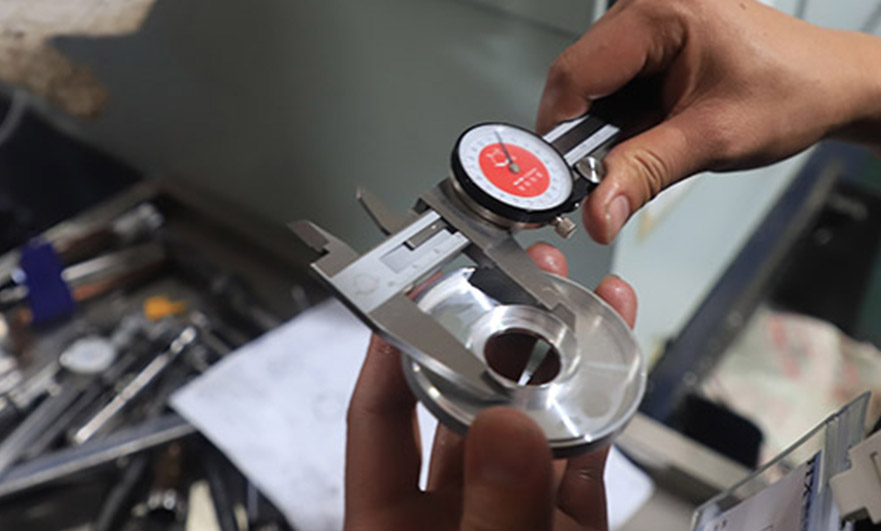
Inspection and measurement technologies are equally vital when dealing with ultra-tight tolerances. Traditional measurement tools such as calipers and hand gauges are insufficient for verifying the accuracy of micro-scale components. Instead, manufacturers rely on advanced metrology equipment like coordinate measuring machines (CMM), optical comparators, white-light interferometers, profilometers, and laser scanning devices that can detect variations measured in microns or nanometers. Non-contact inspection has become especially important for delicate materials and micro-machined parts, ensuring that measurement itself does not alter or damage the component. Statistical process control (SPC) and real-time quality analysis help manufacturers identify patterns of deviation during production, allowing immediate adjustments that prevent defects. By integrating precision inspection with automated data logging and AI-driven analytics, modern CNC operations can maintain consistency at scale while reducing waste, defects, and rework costs.
Understanding tolerances also means understanding how they influence overall product performance and manufacturing costs. Tight tolerances generally result in higher production complexity, longer machining times, increased tooling wear, and more stringent inspection requirements. As a result, tolerances must be determined with careful consideration of both engineering needs and economic efficiency. Over-specifying tolerances can unnecessarily drive up costs, while under-specifying them can lead to mechanical failures, reduced product life, or sub-optimal performance. The key is to define tolerances that align with functional requirements. Critical components—such as those used in aerospace flight systems, implantable medical devices, semiconductor photonics, and precision optics—naturally require extreme precision. In contrast, non-critical surfaces or aesthetic features may allow more generous tolerances. By clearly communicating tolerance priorities during the design phase, engineers and machinists work together to create a balance between performance and manufacturability.
As industries continue to advance, tolerances in ultra-precision CNC manufacturing will only grow more demanding. The rise of nanotechnology, microelectromechanical systems (MEMS), autonomous robotics, and quantum computing is creating new applications that require extraordinary accuracy at smaller scales than ever before. AI-driven process optimization, smarter CNC controls, hybrid manufacturing methods, and increasingly sophisticated materials will elevate what manufacturers can achieve. The role of tolerances will expand from a quality control parameter to a central strategic factor driving innovation across sectors. In a world where precision directly influences technological progress, understanding tolerances is not just an engineering requirement—it is a competitive advantage. Companies that master ultra-precision CNC tolerances will continue shaping the future of advanced manufacturing, enabling breakthrough products that deliver higher performance, greater reliability, and unprecedented levels of refinement across global industries.